
Fix It Later – Part II: How Construction-Phase Decisions Lead to Rework and Cost Escalation
“Someone will catch that later.”
On a construction site, this assumption is one of the most expensive risks a project can carry.
While many cost overruns begin in design, it is during construction that costs escalate rapidly—especially when issues are left unresolved in the field.
What “Fix It Later” Looks Like in Construction
During construction, this mindset appears as:
• Accepting unclear or non-compliant installations
• Allowing deviations from drawings to remain uncorrected
• Overlooking coordination issues between trades
• Deferring decisions to later phases of construction
At this stage, every issue is tied to installed work—which makes correction significantly more expensive.
Why Construction Is Where Costs Multiply
Once materials and systems are installed:
• Access becomes limited
• Multiple trades are impacted
• Work must often be removed before it can be corrected
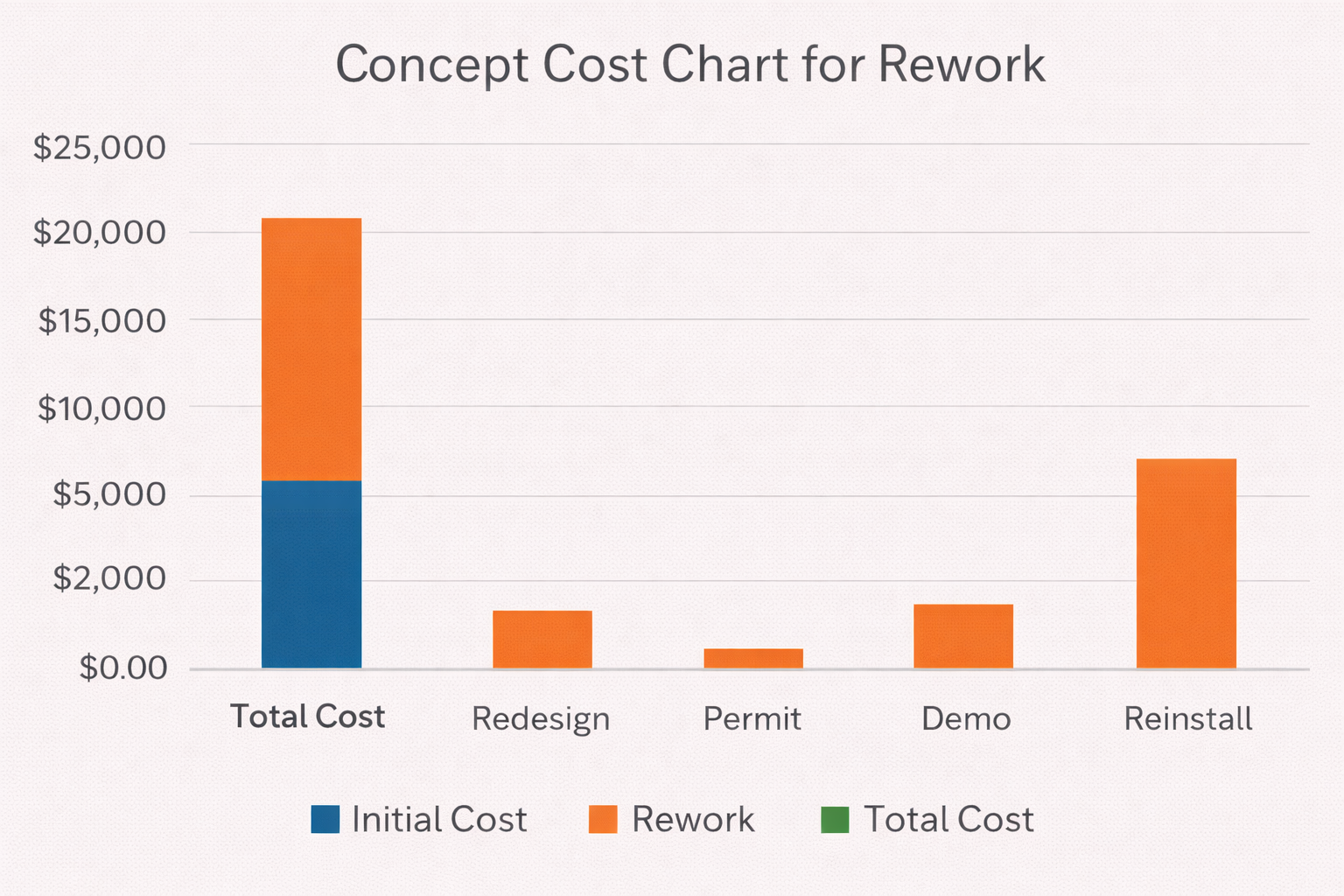
Graph comparing initial construction cost, $6,000, with the total costs associated with redoing the work, over $20,000.
This creates a compounding effect:
The later an issue is addressed, the more expensive it becomes.
Common Construction-Phase “Fix It Later” Failures
1. Uncorrected Field Deviations
Examples include:
• Improper structural connections
• Incorrect fasteners or anchorage
• Misaligned assemblies
These are often visible—but ignored under the assumption that someone else will address them.
In many cases, they are not corrected until:
– Inspection failure
– System malfunction
– Post-construction repair
2. Trade Coordination Breakdowns
When coordination is not enforced in the field:
• Systems overlap or conflict
• Work is damaged during subsequent installation
• Trades must rework completed installations
This leads to:
– Lost productivity
– Increased labor costs
– Schedule disruption
3. Inspection-Driven Corrections
When compliance is not verified during installation:
• Issues are identified during inspection
• Work must be exposed or demolished
• Downstream trades are delayed
At this stage, costs are at their highest.
4. Deferred Decision-Making in the Field
When decisions are pushed forward during construction:
• Work pauses or proceeds incorrectly
• Temporary solutions become permanent problems
• Rework becomes unavoidable
The Compounding Effect of Rework
A single issue can trigger:
• Demolition
• Re-coordination
• Reinstallation
• Schedule delays
This creates a multiplier effect across the project.
Why This Happens
Construction-phase issues are often driven by:
• Schedule pressure
• Lack of clear oversight
• Assumptions about responsibility
• Gaps in communication between trades
Without active management, issues move forward instead of being resolved.
The Role of an Owner’s Representative During Construction
An Owner’s Representative provides active oversight where it matters most—on the job site.
Key responsibilities include:
• Monitoring installation against design intent
• Identifying and addressing deviations early
• Coordinating between trades
• Ensuring compliance before inspections occur
The goal is simple:
Resolve issues immediately—before they become expensive.
How to Prevent Construction-Phase Cost Escalation
Maintain Active Oversight
• Verify work as it is installed
• Do not rely solely on contractor QC
Enforce Immediate Corrections
• Address issues when they are small
• Prevent escalation into rework
Coordinate Trades in Real Time
• Ensure sequencing is aligned
• Prevent conflicts before installation
Key Takeaway
“Fixing it later” during construction is not a delay—it is an escalation.
Projects that defer decisions in the field experience:
• Increased rework
• Higher costs
• Longer schedules
Projects that address issues immediately maintain control.
Start Here
Read Part I: Why Deferred Design Decisions Drive Cost Overruns
Planning a Project?
JR Design Build Architect provides:
• Residential architecture
• Portland permitting and due diligence
• Owner’s Representative / Construction Management advisory
Schedule a consultation to maintain control during construction and avoid costly rework.
