
Why Construction Costs Increase Mid-Project (And How to Prevent It)
Construction projects rarely fail because of a single catastrophic mistake.
They fail quietly—through small gaps in design, unclear scope, and delayed decisions—that compound over time into real cost increases.
If you are planning a remodel or new construction project in Portland, understanding why costs increase mid-project is one of the most important steps you can take to protect your budget.
The Reality: Cost Overruns Are Predictable
Most homeowners assume cost increases are:
Bad luck
Contractor-driven
Or simply “part of construction”
In reality, cost overruns are usually the result of predictable breakdowns in the process—not random events.
The key is recognizing where those breakdowns occur.
Where Projects Go Off Track
1. Incomplete Design at the Start
Construction pricing is only as accurate as the information provided.
When drawings lack detail:
Materials are not fully defined
Assemblies are not clearly specified
Scope is left open to interpretation
– Contractors are forced to make assumptions
– Assumptions lead to allowances
– Allowances turn into change orders
Result: The project starts with an artificial budget that increases once real decisions are made.
2. Late Design Changes During Construction
Changes during construction are one of the most expensive actions in any project.
Even small revisions can trigger:
Demolition of completed work
Re-coordination of trades
Additional permitting or review
Visualizing the Cost Impact
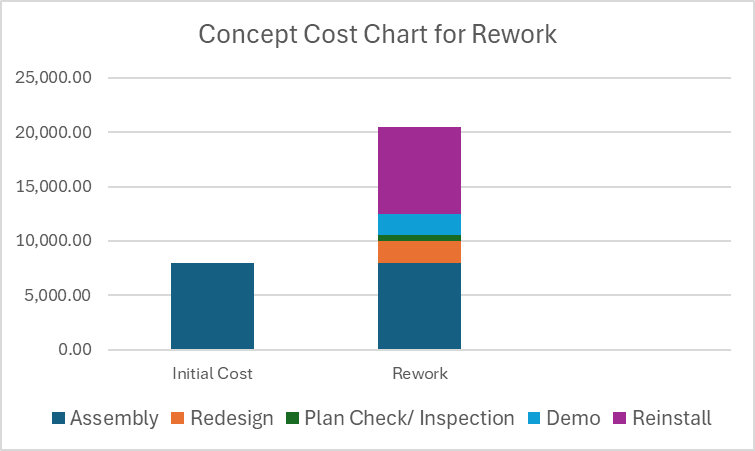
A simple change does not just add cost—it multiplies it across labor, schedule, and coordination.
3. Permit Delays and Review Cycles
In Portland, permitting is not just a step—it is a variable timeline risk.
Common issues include:
Incomplete submittals
Conflicting code interpretations
Additional review triggers (structural, life safety, accessibility)
When permits stall:
Contractors are delayed
Schedules shift
Pricing assumptions expire
Result: Costs increase before construction even progresses.
4. Undefined Scope Between Design and Construction
One of the most common (and overlooked) causes of cost increases is scope misalignment.
This occurs when:
The design intent is not fully communicated
Construction documents lack specificity
Responsibilities are unclear between parties
This creates:
Gaps in bidding
Disputes during construction
Owner-driven clarifications mid-project
– Every clarification becomes a potential cost increase
The Pattern Behind Cost Increases
Across nearly all projects, cost overruns follow the same pattern:
Early assumptions replace defined decisions
Gaps in documentation shift risk to construction
Late clarity becomes expensive
This is not a contractor issue or a design issue alone.
It is a process issue.
How to Prevent Cost Overruns
The goal is not to eliminate all changes—it’s to control when and how decisions are made.
1. Fully Define the Project Before Construction
Complete design development
Define materials and assemblies
Resolve key details early
– The more decisions made before construction, the fewer surprises later
2. Align Design Intent with Constructability
Design must be:
Clear enough to price
Practical enough to build
This requires coordination between:
Architect
Contractor
Owner
3. Treat Permitting as a Strategy, Not a Step
Especially in Portland:
Anticipate review timelines
Understand trigger points
Submit complete, coordinated documents
4. Establish Oversight During Construction
Construction is where alignment is tested.
Without oversight:
Scope gaps widen
Decisions become reactive
Costs drift
An Owner’s Representative / Construction Advisor helps:
Maintain alignment between design and construction
Identify issues before they escalate
Protect the owner’s budget and intent
The Bottom Line
Construction cost increases are not random.
They are the result of:
Incomplete information
Misaligned expectations
Late decision-making
When the process is structured correctly, these risks can be significantly reduced.
Want a Deeper Breakdown?
If you’re planning a project and want a clearer understanding of where cost risks come from—and how to control them:
Considering a Project?
JR Design Build Architect provides:
If you’re evaluating a project and want to avoid costly surprises:
Schedule a consultation to discuss your project approach.
