
How Long Does It Take to Permit an ADU in Portland?
One of the first questions homeowners ask when considering an Accessory Dwelling Unit (ADU) is: "How long will permitting take?"
The short answer: it depends — and the more useful question is what could delay your permit, and what can you do about it.
Before diving into timelines, it helps to confirm your property is eligible in the first place - check out Can I Build an ADU on My Property in Portland?
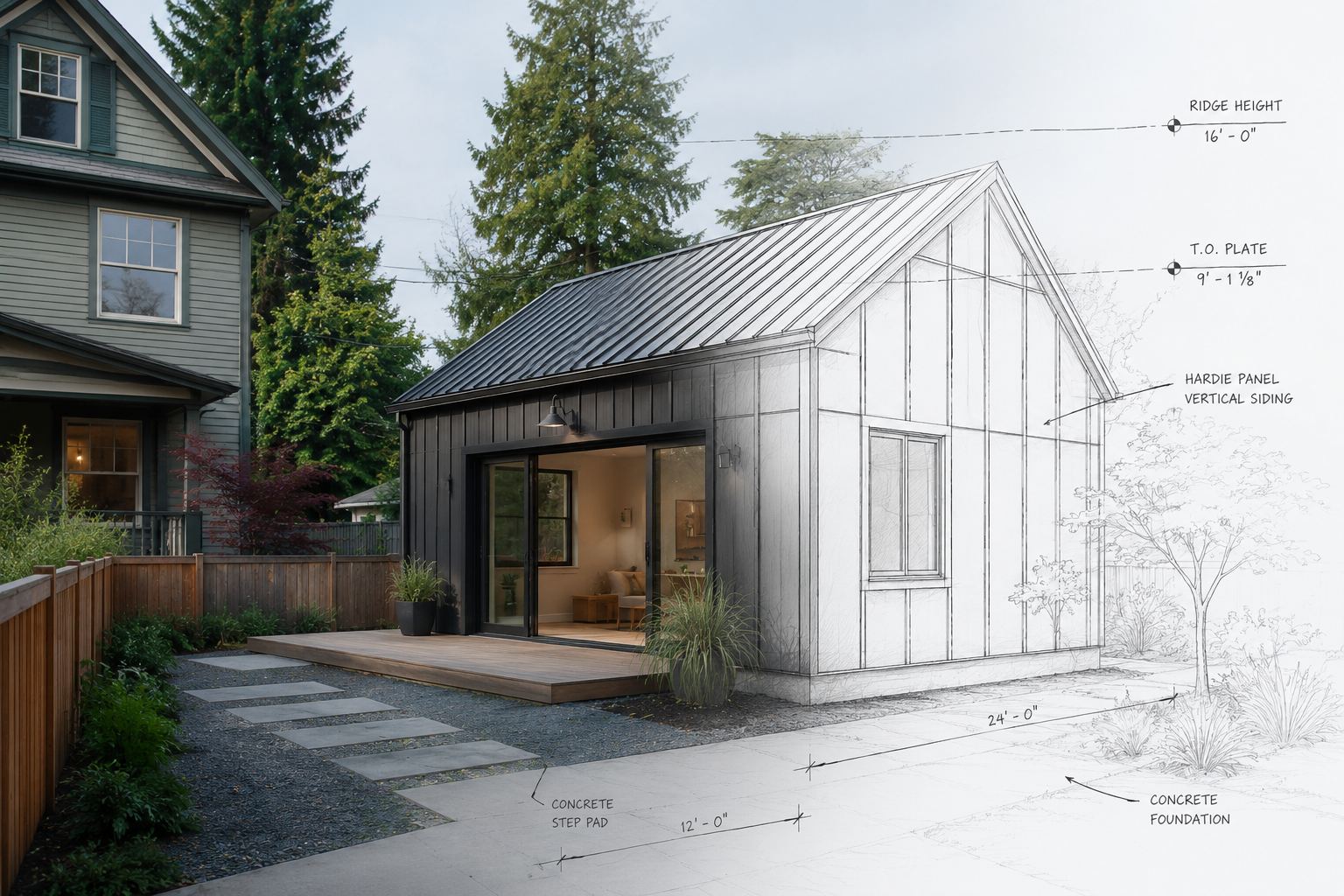
Many Portland ADU projects begin with a feasibility review to understand zoning, setbacks, utilities, stormwater impacts, and site constraints before design begins.
The Honest Answer on ADU Permit Timelines
There is no single timeline that applies to every project. Many Portland ADU projects take several months from early planning through permit issuance, with the range varying significantly based on project complexity, site conditions, and how complete and well-coordinated the permit documents are.
Considering your own ADU? JR-DBA can help with Architectural Services and Owners Representation
What many homeowners don't realize is that permitting delays are often not caused by City review times alone. In many cases, the biggest schedule impacts happen before the permit is submitted — or during correction cycles after review comments come back.
(How Long Does It Take to Get a Building Permit in Portland?)For a broader look at Portland permitting timelines beyond ADUs, this overview covers the full residential permit process.
Understanding this early can help you avoid unnecessary redesign costs, schedule surprises, and frustration.
What Factors Affect ADU Permit Timelines?
Every property is different. Here are the factors that most commonly influence how long an ADU takes to permit in Portland.
Property Feasibility and Site Constraints
A property that looks straightforward on paper can have hidden challenges that slow things down. Common issues include:
Tree preservation requirements
Environmental or other zoning overlays
Site access limitations
Existing drainage conditions and stormwater impacts
Slope and grading challenges
Utility conflicts
These conditions can require additional analysis or redesign before permits move forward — which is exactly why early feasibility review often saves significant time later.
Completeness of Permit Documents
One of the largest drivers of permitting delays is incomplete or unclear permit drawings. Reviewers need enough information to confirm compliance across multiple areas: zoning, structural requirements, building and energy code, fire and life safety, and site development. Review the article: Portland ADU Zoning, Setbacks & Size Requirements Explained
Missing information triggers correction cycles. And correction cycles add weeks — sometimes months — to a project timeline.
Detached ADU vs. Garage Conversion: Which Permits Faster?
Many homeowners assume garage conversions are always quicker to permit. Sometimes that's true — but not always.
Existing structures often come with their own complications: foundation limitations, moisture issues, ceiling height restrictions, structural upgrade requirements, or fire separation provisions. Detached ADUs involve more site and utility coordination, but can sometimes offer a cleaner design path.
The answer depends heavily on your specific property and what's already there.
Common Reasons ADU Permits Get Delayed in Portland
Many permitting delays are preventable. Here are the most frequent culprits:
Incomplete drawings — Missing details, inconsistent plans, or unclear code compliance documentation are among the most common triggers for review comments.
Tree review requirements — Protected trees can affect ADU placement or trigger mitigation requirements that weren't anticipated in early design.
Stormwater and impervious surface impacts — Additional roof area, walkways, or new paving can push a project into stormwater review territory.
Utility coordination — Water, sewer, and electrical requirements sometimes involve more scope or agency coordination than expected.
Structural complexity — Garage conversions and remodels frequently uncover unforeseen conditions once design gets underway.
Scope changes during review — Owner changes made after permit submission can restart portions of design and review.
Incorrect early assumptions — Zoning or code limitations discovered late in the process may require significant redesign.
(The Hidden Costs of Permit Delays and Inspection Failures in Portland) Delays don't just affect your schedule — they affect your budget. This article breaks down the real financial impact of common permitting setbacks.
Most of these issues are easier and less expensive to work through before permit documents are finalized.
How to Reduce ADU Permit Delays
No project is completely without risk, but there are practical steps that improve permitting efficiency.
Start with a feasibility review. Understand your zoning constraints, site limitations, and potential risks before significant design work begins. It's far less expensive to discover a problem at this stage.
Set a realistic scope early. Aligning project expectations with your budget and actual site conditions upfront prevents painful mid-design corrections.
Coordinate utilities early. Utility surprises are one of the most common sources of cost and schedule impacts — and one of the most avoidable.
Invest in complete, coordinated permit documents. Thorough plans generally move through review more efficiently and generate fewer correction cycles.
Expect some review comments. Permit corrections are a normal part of the process. The goal isn't to guarantee a first-pass approval — it's to reduce avoidable corrections and move efficiently through each cycle.
The Real Goal: Predictability
Many homeowners focus on speed, which is understandable. Speed often leads to compromise without an experienced Owner’s Representative as part of the team that is able to lead the process with fewer surprises, fewer redesigns, and fewer avoidable delays.
An ADU project that begins with strong planning, realistic expectations, and early feasibility analysis is more predictable — both in schedule and in cost. That predictability is often worth more than an optimistic timeline that falls apart halfway through.
Final Thoughts
ADU permitting timelines in Portland vary widely. In many cases, delays aren't caused by any single issue, but by a series of small assumptions that were never fully evaluated at the start.
Understanding your zoning, utilities, stormwater implications, site constraints, and permitting expectations before design begins helps you make informed decisions and reduces downstream risk.
Considering an ADU in Portland? JR DBA provides residential architectural services, permitting support, and early feasibility analysis to help homeowners better understand zoning, permitting risks, hidden costs, and realistic project timelines before construction begins.
(White Paper: The Hidden Cost Drivers in Portland Residential Construction)
