
Can I Build an ADU on My Property in Portland?
Adding an Accessory Dwelling Unit (ADU) can increase property value, generate rental income, support multi-generational living, or provide flexible space for family and guests.
But one of the most common assumptions homeowners make is believing that because they own the property, they can automatically build an ADU.
In Portland, that is not always the case.
The better question isn't simply "Can I build an ADU?" — it's:
Can I build an ADU on my specific property without triggering unexpected costs, delays, or design limitations?
Many homeowners spend money on conceptual plans before fully understanding zoning limitations, site constraints, utility requirements, permitting timelines, or hidden code issues that can affect feasibility. If you've read our white paper on The Hidden Cost Drivers in Portland Residential Construction, you already know how quickly an optimistic budget can erode once site realities surface.
A feasibility review before design often saves substantial time, redesign costs, and frustration — and if you're wondering how long the permitting process takes, our blog How Long Does It Take to Get a Building Permit in Portland? walks through what to expect at each stage.
The Short Answer: Many Portland Properties Can Support an ADU — But It Depends
Portland has supported ADU development for years, and many residential properties may qualify. However, eligibility depends on a range of factors:
Zoning designation
Existing structures on site
Lot configuration and access
Setbacks and height restrictions
Utility considerations
Tree preservation requirements
Environmental overlays
Building code requirements
Site topography and constructability
Storm water drainage strategy
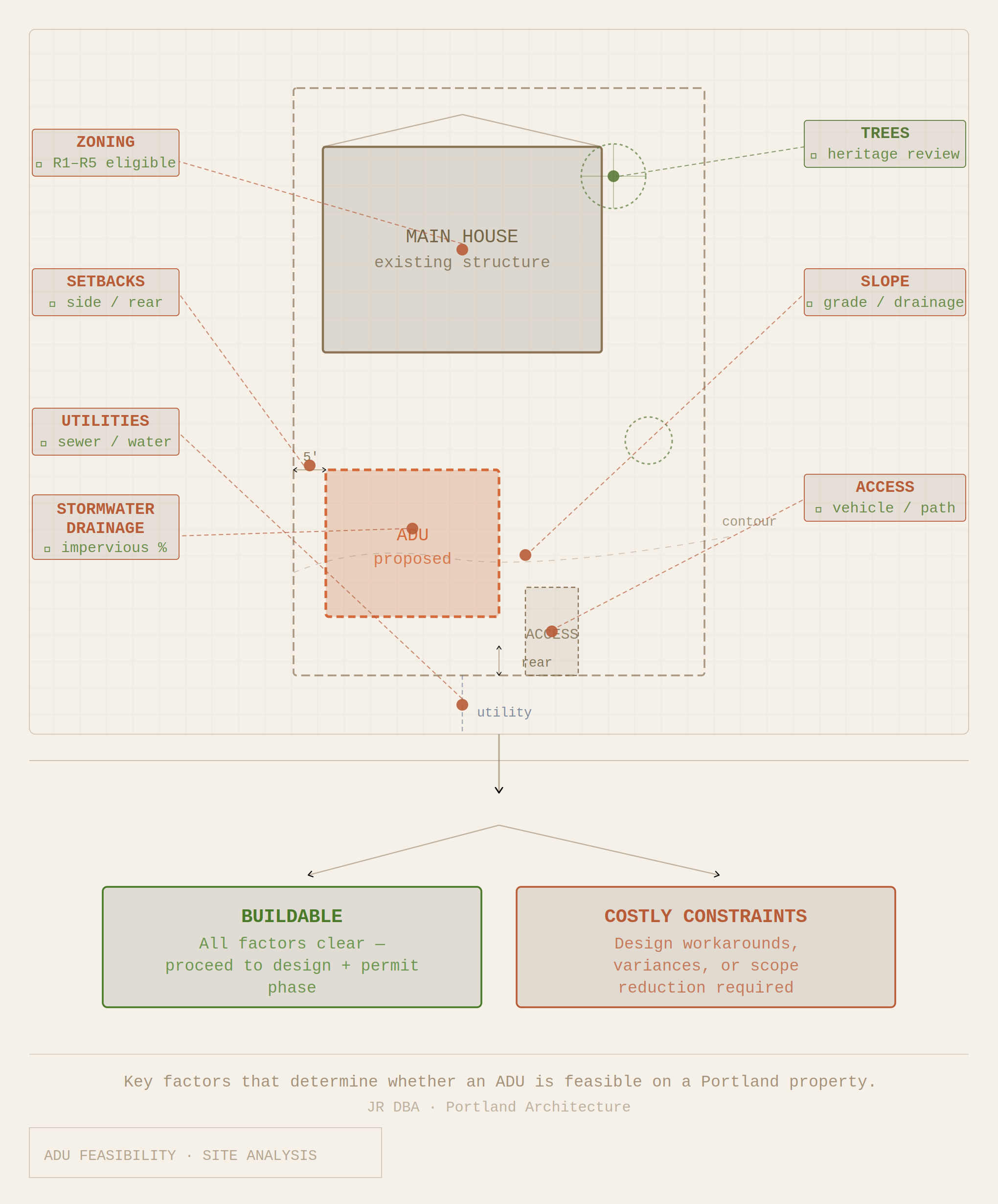
Key factors that determine whether an ADU is feasible on a Portland property. A thorough site analysis before design begins can reveal constraints early — before they become budget surprises.
A property that looks ideal on paper may still face permitting or construction challenges that significantly affect cost and feasibility. Understanding those challenges before design begins is the difference between a smooth project and an expensive one.
Step 1: Verify Zoning and Property Constraints
The first step is determining what your property legally allows.
In Portland, ADUs are permitted in many residential zones, but zoning regulations still affect key design and feasibility factors:
Maximum Size ADU size allowances vary depending on the proposed configuration and applicable zoning standards.
Height Limits Detached ADUs may be limited by height restrictions that affect usable square footage, roof form, or second-story design.
Impervious Area limitations on hardscape, driveways and roof surfaces can limit your projects foot print.
Setbacks Rear and side yard setbacks influence where a detached ADU can be located on the lot.
Lot Configuration Irregular lots, flag lots, narrow lots, and steep sites can create design or access limitations that aren't visible until a site review is completed.
Overlay Zones Environmental, historic, floodplain, wildfire, or design overlay requirements can complicate permitting and increase costs in ways that aren't obvious from a zoning map alone.
A zoning review early in the process can identify whether your site supports a detached ADU, attached ADU, garage conversion, basement conversion, or internal home conversion. Not every property is equally suited for every ADU type — and pursuing the wrong type from the start wastes both time and money.
Step 2: Evaluate Existing Site Conditions
Even where zoning allows an ADU, physical site conditions often become the next challenge. This is typically where project assumptions begin to change.
Utility Constraints Water, sewer, electrical service, and stormwater requirements can introduce substantial costs depending on site conditions and utility locations. These aren't always visible until a utility investigation is completed.
Tree Preservation Requirements Portland's tree preservation rules can affect where an ADU may be placed and may trigger mitigation requirements if tree removal is proposed — even if those trees aren't immediately adjacent to the intended building site.
Topography Steep sites can significantly increase foundation, retaining wall, drainage, and access costs. What looks like a flat backyard on a survey can tell a different story during site review.
Existing Building Conditions Garage conversions and basement conversions may uncover structural deficiencies, moisture concerns, ceiling height limitations, or code upgrade requirements. These are among the most common sources of budget surprises in ADU projects.
What initially appears to be a straightforward ADU can quickly become a more complex and expensive project — a pattern we've documented in detail in The Hidden Costs of Permit Delays and Inspection Failures in Portland.
Step 3: Understand the Permitting Process
Permitting is one of the most underestimated parts of ADU construction.
A typical Portland ADU project may require review of:
Zoning compliance
Building code compliance
Structural review
Energy code requirements
Stormwater considerations
Site development issues
Tree review
Utility coordination
Permit timelines can vary significantly depending on project complexity, completeness of submittal documents, and the nature of review comments received. In many cases, delays occur because property constraints or code requirements were not fully evaluated during early planning — making a later redesign necessary. We cover this dynamic in depth in Why Construction Costs Increase Mid-Project (And How to Prevent It).
For ADU-specific permitting timelines, see our upcoming post How Long Does It Take to Permit an ADU in Portland?, and watch for Why ADU’s in Portland Cost More than Expected.
Common Reasons ADU Projects Become More Expensive Than Expected
Many homeowners begin with an optimistic budget, only to discover hidden cost drivers later in the process. The most common include:
Site Work Excavation, retaining walls, grading, drainage improvements, and access challenges can add costs that weren't visible in early estimates.
Utility Upgrades Electrical service upgrades, sewer work, or water service modifications are frequently required and frequently underestimated.
Structural Upgrades Existing garages or basements may require framing, seismic, or foundation improvements before conversion is possible.
Permit Delays Longer permitting timelines increase consultant, financing, escalation, and contractor holding costs. These costs are real — even when construction hasn't started yet.
Scope Expansion Projects often evolve during design as owners recognize opportunities for higher quality or additional space. Without early cost awareness, this expansion can push projects over budget.
These are not necessarily project killers. But they are important to identify early — before significant design fees have been spent. Our white paper on The Hidden Cost Drivers in Portland Residential Construction provides a comprehensive breakdown of where residential project budgets most commonly go off track.
Should You Start with Design or Feasibility?
Many homeowners begin by hiring a designer and developing floor plans immediately.
In many cases, a better first step is a feasibility and permitting review to answer the questions that matter most:
Is an ADU realistic on this property?
What type of ADU makes the most sense given site conditions?
What zoning or code constraints apply?
What hidden costs should be expected?
Are there permitting risks that could affect timeline or budget?
Understanding these items before design begins reduces redesign costs, prevents avoidable surprises, and helps owners make genuinely informed decisions about whether — and how — to move forward.
Final Thoughts
The real question isn't whether an ADU can be built — it's whether it can be built cost-effectively and without surprises that could have been identified earlier.
A successful ADU project begins with understanding the property, local permitting requirements, and site constraints before construction documents begin. For most Portland homeowners, early planning and feasibility review is among the highest-value steps in the entire process.
Considering an ADU in Portland? JR-DBA provides residential architectural services, including feasibility, constructability and life cycle analysis or with assistance through the construction process consider Owners Representation services.
