
Why Quality Craftsmanship Lasts: What Older Buildings Teach Us About Quality Construction
There's a reason certain buildings are still standing after 100, 200, even 500 years — and it has very little to do with luck. It comes down to craftsmanship. The kind of deliberate, detail-oriented construction that treats every joint, every material choice, and every water management decision as something that matters.
As an architect, owner's representative and having previously worked as an expert witness for construction litigation, I spend a lot of time thinking about why buildings fail. But I find it more instructive — and honestly more inspiring — to study why some buildings don't.
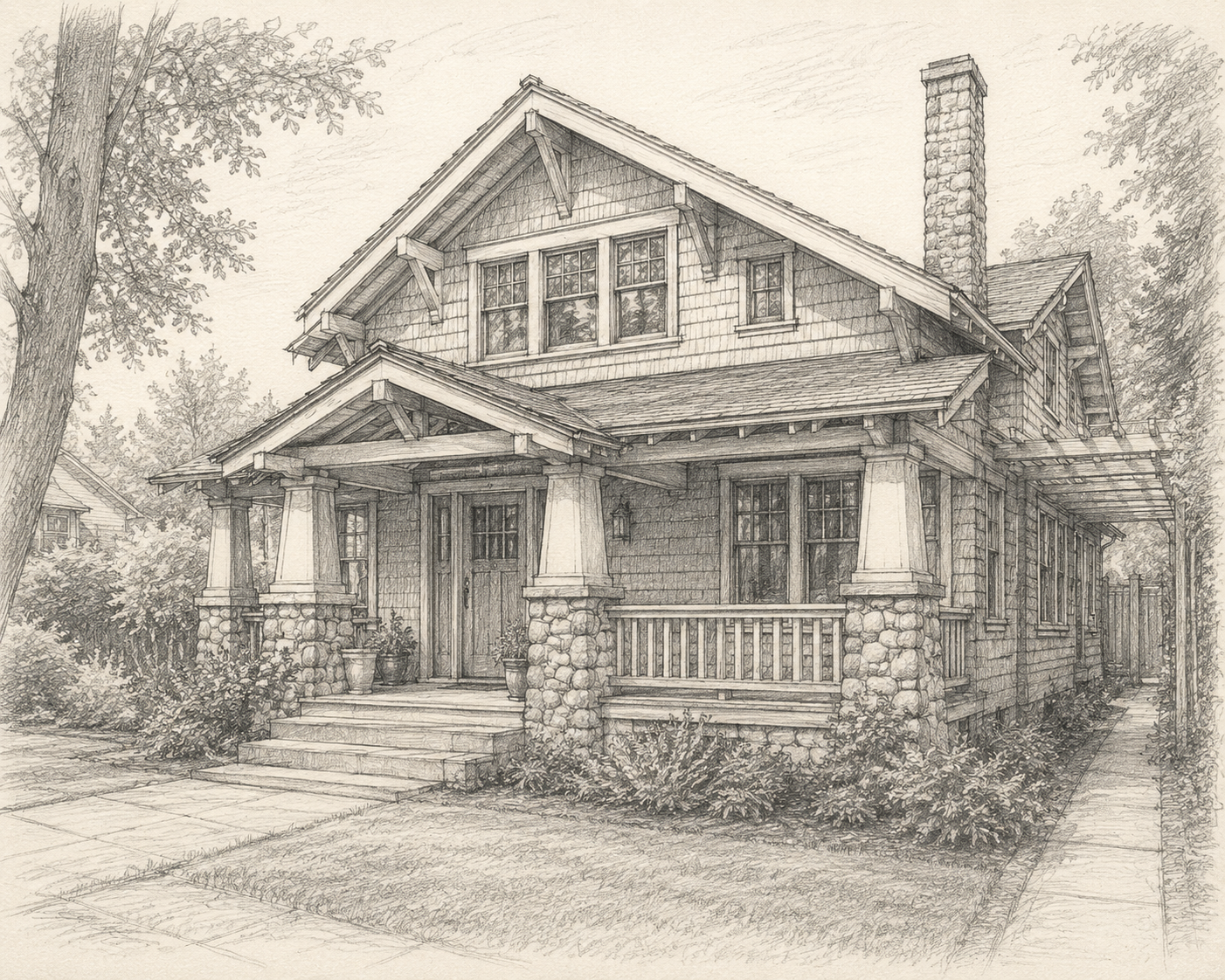
Historic Craftsman homes were designed with durable materials, thoughtful detailing, and a level of craftsmanship that continues to influence residential architecture today.
Craftsmanship as a Philosophy, Not Just a Skill
When we talk about quality construction, we're really talking about a philosophy: that the way something is built determines how long it survives. Craftsmen builders of previous centuries didn't have modern synthetic materials as a fallback. They had to get it right with what they had. Stone, timber, lime, slate — materials that demanded precision and understanding.
The result? Buildings that still stand while far newer construction has crumbled around them.
What made those builders different wasn't magic. It was attention to a few core principles that still apply today.
What Quality Actually Looks Like in Older Construction
1. Joinery That Works With the Material
In timber-framed buildings — think traditional Pacific Northwest heavy timber or old New England post-and-beam — joinery was designed to allow wood to move. Wood expands and contracts with moisture and temperature. Quality craftsmen understood this and cut their joints accordingly: mortise-and-tenon connections, wooden pegs, carefully fitted bracing. The structure breathes rather than fights itself.
Modern construction sometimes fights the material. Rigid connections in wood-framed assemblies can create stress points that fail over time. The older approach had humility built in.
2. Masonry That Manages Moisture
Traditional stone and brick buildings were built with lime mortar — a softer, more flexible material than modern Portland cement. This wasn't a limitation. It was an intentional system. Lime mortar allows moisture to move through and out of a wall. The wall breathes.
When older masonry buildings fail today, it's often because someone repointed them with hard cement mortar. The wall can no longer move moisture out, so it traps it instead. Spalling, cracking, and water intrusion follow. The "upgrade" caused the damage.
3. Roof Forms That Shed Water Decisively
Look at older homes with steep, simple roof pitches. There's a reason for that geometry. Water needs to move fast and away from the structure. Complex rooflines with valleys, flat sections, and multiple penetrations are opportunities for failure. Older builders kept roofs simple because they understood that water always wins if you give it a chance to sit.
You see this clearly in Irish stone cottages and Icelandic vernacular construction — both regions with extreme weather — where the roof pitch is steep, the overhangs are generous, and the form is straightforward. Longevity by design.
4. Details That Assume the Worst
Quality craftsmen assumed water would find a way in somewhere, wind would push harder than expected, and materials would move over time. Their details accounted for that reality. Drip edges, sloped sills, generous overhangs, deep-set windows — all of these are defensive details. They're saying: even if conditions are bad, this assembly will still perform.
Modern construction sometimes optimizes for how something looks on a clear day. Quality craftsmanship optimizes for what happens on the worst day.
Why This Matters for Portland Homeowners Today
Here in the Pacific Northwest, we're dealing with many of the same conditions that shaped traditional construction methods in wet, harsh climates: persistent moisture, wind-driven rain, and significant temperature swings. Our older housing stock — Craftsman bungalows, Tudor revivals, early American Foursquares — was often built with these principles in mind.
When those homes are remodeled today, the craftsmanship principles that made them durable can be accidentally undone. Replacing lime plaster with hard drywall systems, sealing up wall assemblies that were designed to dry, or adding complex roof additions to a simple original structure — these decisions can introduce failure modes that didn't exist before.
At JR-DBA, this is something we think about constantly. Understanding how a building was originally designed to perform is the starting point for any remodel or addition. Respecting that logic — or deliberately improving on it — is what separates a successful project from one that creates problems five years down the road.
The Thread That Runs Through It All
Whether it's a centuries-old Irish stone farmhouse, a Scandinavian timber barn, or a 1920s Craftsman bungalow in Portland, the buildings that last share something in common: they were built by people who understood their materials, respected the climate, and sweated the details.
That philosophy hasn't changed. The materials and methods have evolved, but the underlying thinking — build it right, build it to last — is as relevant today as it ever was.
In the coming posts, we'll look at specific architectural styles that embody these principles, and eventually what I'm observing firsthand during upcoming travels to Ireland and Iceland — two places where durable construction isn't just history, it's still standing right in front of you.
Working on an Older Home?
If you're planning a remodel, addition, or preservation project on an older home, we'd love to hear from you. Understanding how your home was originally built — and what it was designed to do — is the first step toward getting it right.
Our experience includes Victorian era replica homes, historic preservation projects, and complex remodels on Portland's older housing stock. We bring the same attention to craft and constructability to every project, whether we're working with a century-old assembly or building something new that's designed to last just as long.
If you're navigating the complexities of an older home and want an experienced eye on what you're working with, don’t hesitate to contact us. We're happy to talk through what you've got.
